Heritage
The Story of Calabrian Coffee
6 min read
Walk into a bar in Rome, Naples, or Catanzaro and order a caffè. What arrives is unlike anything you'll get at a chain café. We explain exactly what sets Italian coffee culture apart.
Italy did not invent coffee. Coffee was being drunk in Yemen, Egypt, and Turkey centuries before it arrived in Venice in the 17th century. But Italy did something remarkable with it: it invented espresso, and then it built an entire culture around it so completely that 'Italian coffee' is now a category of its own.
Most of the world's specialty coffee culture in the 21st century has moved toward single-origin beans: traceable, individual farms, natural process, light roast, fruity and bright. Italy largely ignored this movement. Not out of stubbornness, but philosophy. Italian espresso culture values balance, consistency, and the harmony of a well-crafted blend over the drama of a single origin.
"A great Italian blend is like a great symphony. No single instrument dominates. Every element serves the whole."
The best Italian roasters source beans from multiple origins — typically South American Arabicas (Brazil, Colombia, Honduras) for sweetness and body, with East African Arabicas for aromatics, and a proportion of quality Robusta for crema, structure, and that characteristic bittersweetness. The ratios are guarded like family recipes, adjusted seasonally as harvests vary.
In Italy, most coffee is consumed standing at a bar, not sitting in an armchair with a laptop. Prices at the counter are lower by law in many cities. The interaction is quick, communal, and repeated several times a day. Coffee is not a productivity tool — it is a social punctuation mark. You stop. You drink. You talk. You continue.
This standing-bar culture is inseparable from the drink itself. The espresso needs to be consumed immediately — crema oxidises, the shot cools, the texture changes. It is designed for immediate pleasure, not long contemplation. Compare that to a pourover, which is meant to be savoured slowly as it cools to room temperature.
Italian roasters typically roast darker than the Nordic or third-wave American style, but not as dark as the French 'burnt' roast. The target is what we might call a full medium-dark: oils just beginning to emerge on the surface of the bean, chocolate and caramel notes dominant, acidity low, body high. It is designed for milk-based drinks as well as straight espresso.
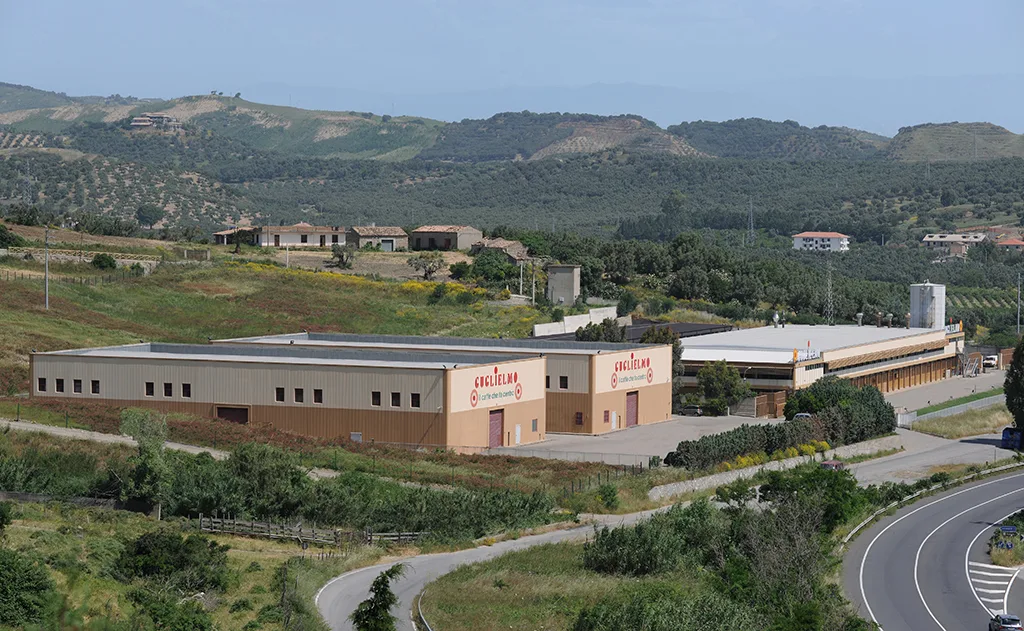
"The Guglielmo family slow-roasts in Calabria. Patience at low temperature. No shortcuts. That is the difference you taste."
Featured In This Article